
At restaurants
Ask your server.
“Do you know where this seafood came from?” A good restaurant should be proud to share the source when they know it.
Death Fish Storied SeafoodAlways ask where the seafood came from
One simple question can turn seafood from a generic menu item into a meal with a source, a season, a working waterman, and a place worth remembering.
Why the question matters
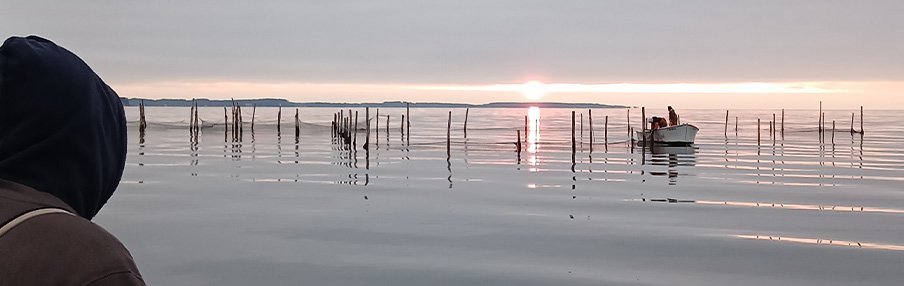
Asking where seafood came from helps keep the harvest connected to the water, the dock, the fish house, the boat, and the working waterman who made the trip. It gives the customer a clearer reason to care about what is on the plate or in the market case.
For restaurants and seafood markets, that same question becomes an opportunity. A clear source story helps staff speak with confidence, gives customers something memorable, and shows visible support for small-scale coastal fisheries and working waterfront communities.
Make it part of the purchase
Restaurants, markets, fish counters, wholesalers, and customers all help decide whether a seafood story stays visible or disappears behind a vague label.
At restaurants
“Do you know where this seafood came from?” A good restaurant should be proud to share the source when they know it.
At seafood markets
Ask what region the seafood came from, when it was landed, and whether it can be connected to a working waterman, vessel, or fish house.

At the counter
Names, regions, boats, gear types, QR codes, harvest dates, and fish houses help turn anonymous seafood into storied seafood.
Four questions to remember
You do not need to become a seafood expert. These four questions make the source part of the conversation.
Ask for a real place: a region, river, sound, creek, dock, fish house, or landing.
Ask whether the seafood can be connected to a working waterman, crew, vessel, or fish house.
Ask about the harvest method. Pound nets, pots, dredges, tongs, rakes, and gill nets each tell a different working-water story.
Ask when it was landed or packed. Freshness, handling, and timing are part of the value.
For restaurants and markets
When a restaurant or market can tell a customer where seafood came from, the seafood becomes more than a price-per-pound or a line on a menu. It becomes a feature, a server conversation, and a signal that the buyer values working watermen and regional harvests.
Wear the message
Purchase a Death Fish Storied Seafood design and help keep local seafood, working watermen, and responsible coastal harvests visible in the communities that depend on them.
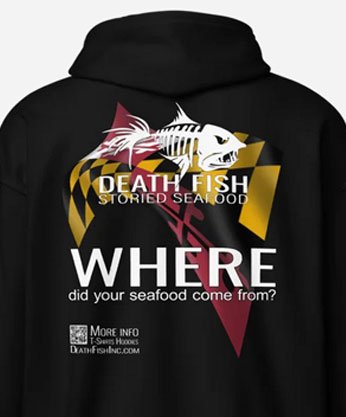
Help make seafood provenance part of the conversation.
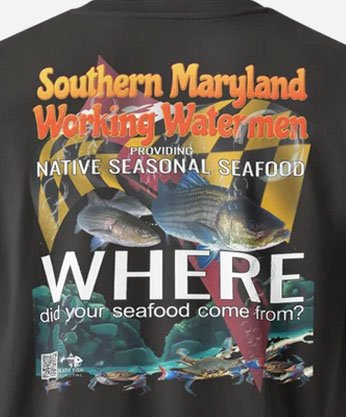
Wear the message for working boats, crews, and families.
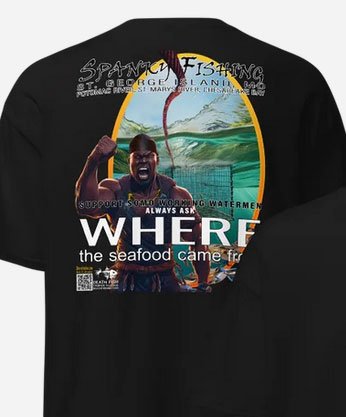
Promote seafood with a known source and a real harvest story.
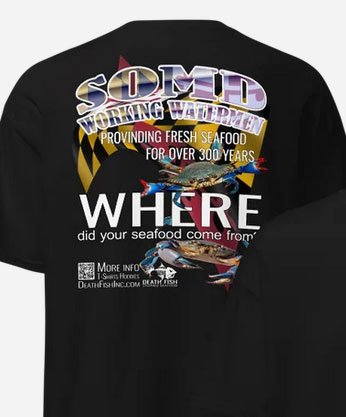
Encourage customers to choose regional seafood when available.
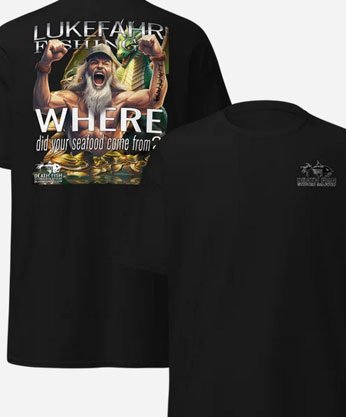
Bring attention to small-scale fisheries and traditional harvests.
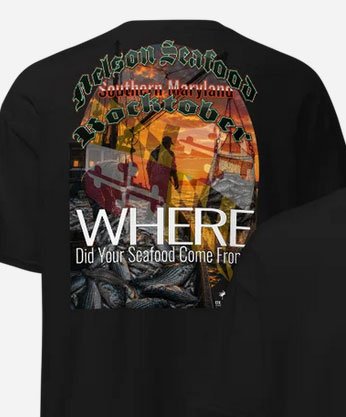
Turn a shirt into a conversation about where seafood comes from.
Consumer action
The more often customers ask where seafood comes from, the more valuable local provenance becomes. That demand helps working watermen, fish houses, seafood markets, and restaurants show the value of fresh regional seafood instead of letting it disappear behind generic labels.
Ask at the restaurant table. Ask at the seafood counter. Ask the retail seller. Every question reminds the seafood industry that the source matters — and that the people who harvest local seafood deserve to be seen, valued, and supported.
Keep the story visible
Use the guide, ask the question, follow the harvest, and help bring working watermen forward in the seafood story.